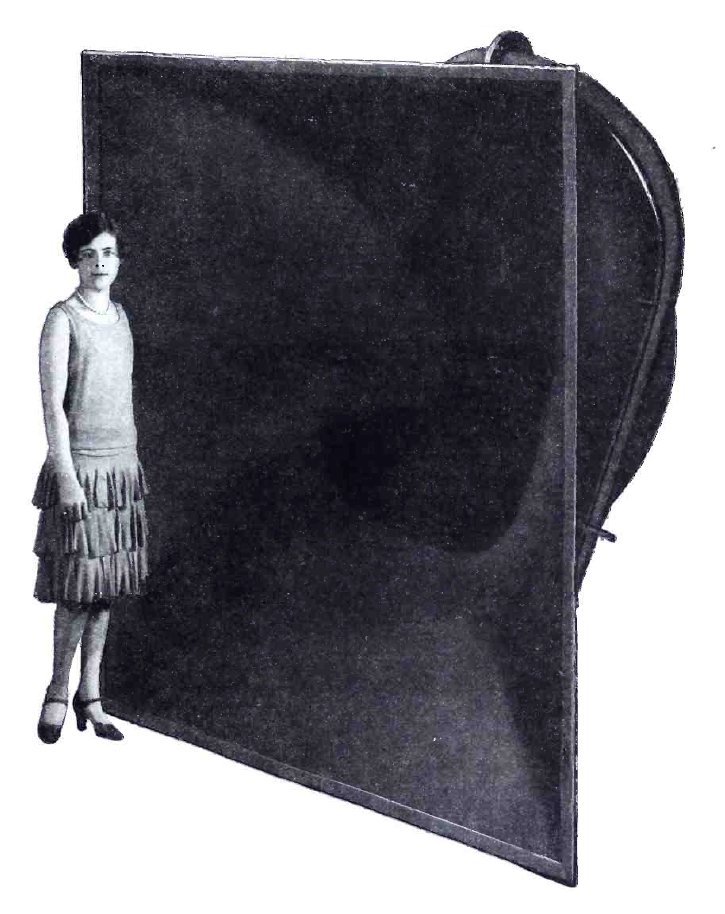
 Theater horn loudspeaker, early 20th century·Author unknown·Public domain
 1876–1915
Origins of amplified sound
Before amplification there was only acoustic geometry — until horns, microphones, and the first electronic gain arrived.
Enter archive
A live sound archive · 1876 to present
Every loudspeaker is a negotiation between electricity, air, geometry, and an audience. This archive follows that negotiation across eight eras — from the first commercial public-address systems to the immersive arenas of the present.
Curatorial thesis
A studio can revise. A concert cannot. Reinforcement happens in a room or an open field, with reflective boundaries, changing weather, a moving stage, and an audience whose bodies absorb high frequencies. The engineer's job is to deliver intelligible, balanced sound without feeding back, without damaging ears, and without hiding the performance behind the machinery.
The eight eras that follow trace how that job was done: first with horns and tubes, then with coaxial cabinets and primitive mixers, then with dedicated concert systems, modular touring walls, line arrays, digital signal processing, networked audio, and finally immersive arena systems.
Theater horn loudspeaker, early 20th century·Author unknown·Public domain 1876–1915
Before amplification there was only acoustic geometry — until horns, microphones, and the first electronic gain arrived.
Enter archive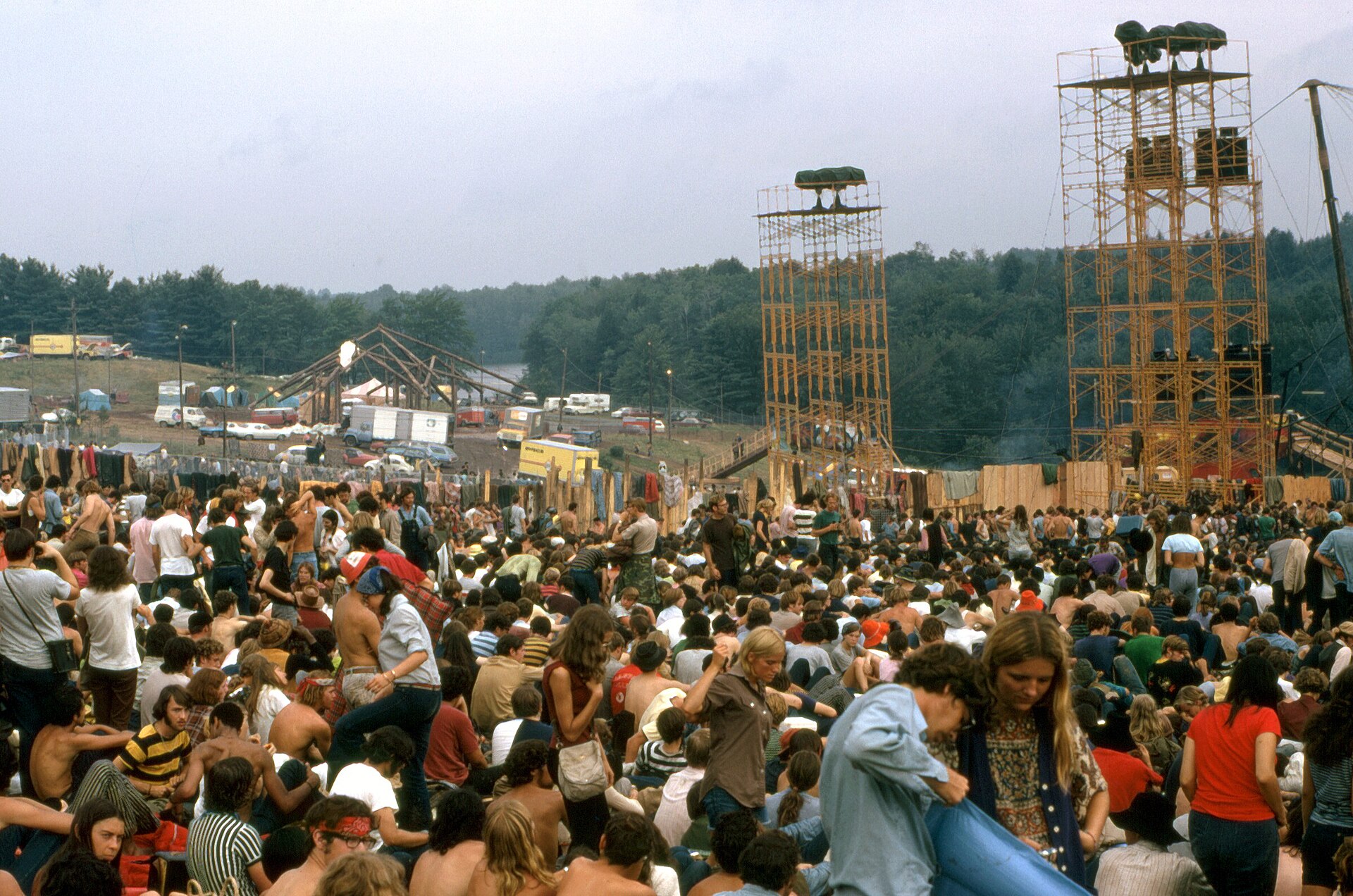 Sound towers above the festival crowd, 1969·James M. Shelley·CC BY-SA 4.0
 1965–1975
Organic demand for volume and the first real monitor mixes forced sound to become its own engineering discipline.
Enter archive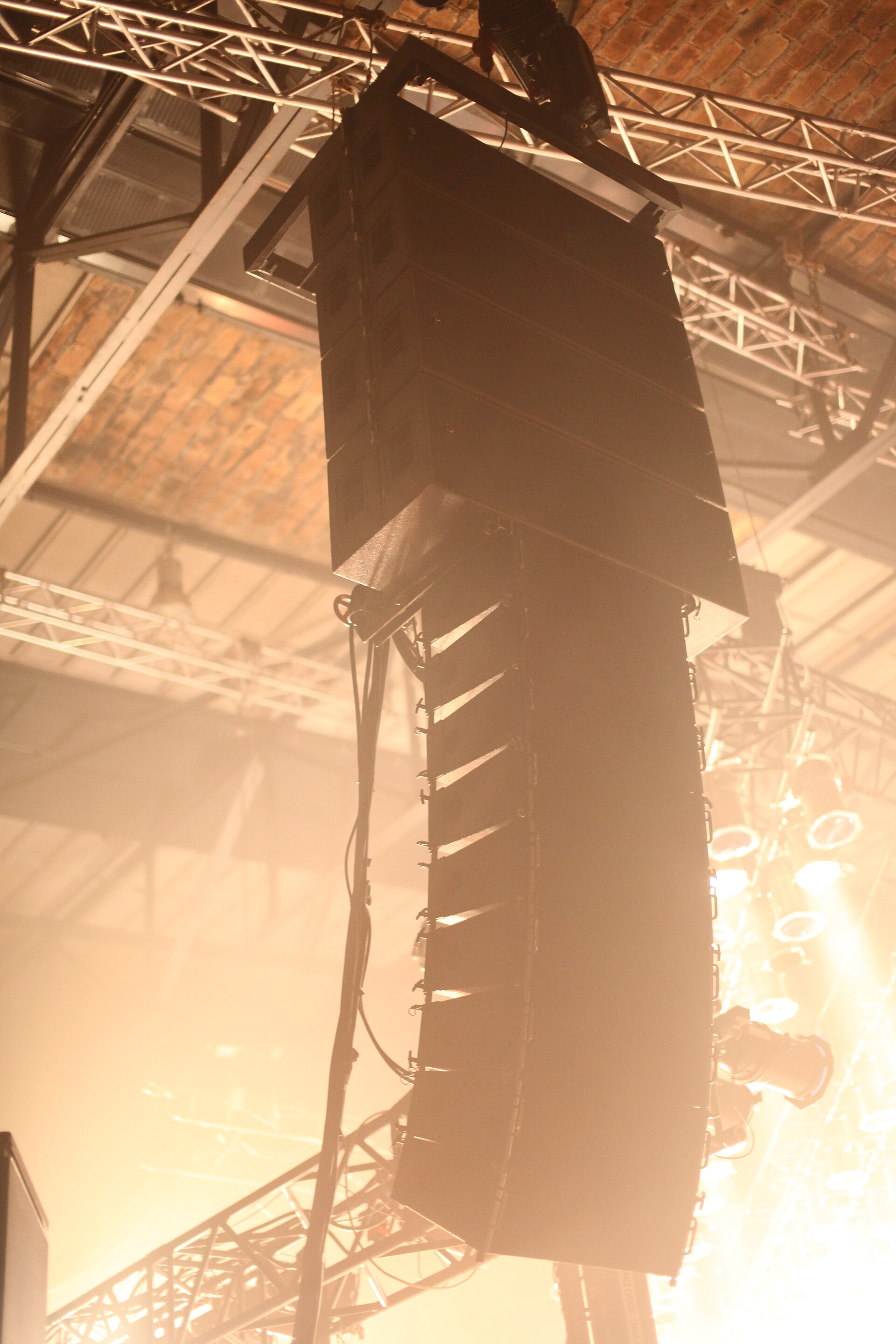 Flown line-array cluster on truss·Ville Hyvönen·CC BY-SA 2.0
 1990–2005
Predictable coverage, digital signal processing, and measurement software turned intuition into a repeatable science.
Enter archiveThe collection
Each era contains its own chronology, hardware profiles, named practitioners, technical principle, vocabulary, and selected sources.
Help build the archive
Support the archive
Resonant is built one verified record at a time: research hours, archival image rights, and the hosting that keeps every era, equipment file, and citation free to read. If this archive is useful to you, a donation of any size keeps the next entry moving.
How donations are usedPayments go directly to the archive’s editor through Venmo and Cash App. Resonant is an independent project rather than a registered charity, so donations are not tax-deductible and nothing is sold or subscribed to in return.