The shift
The first recognizable PA systems combined microphones, tube amplifiers, and efficient horn loudspeakers. Their purpose was speech to a crowd; the driver and crossover engineering that followed came largely from large-room sound systems that live work later borrowed.
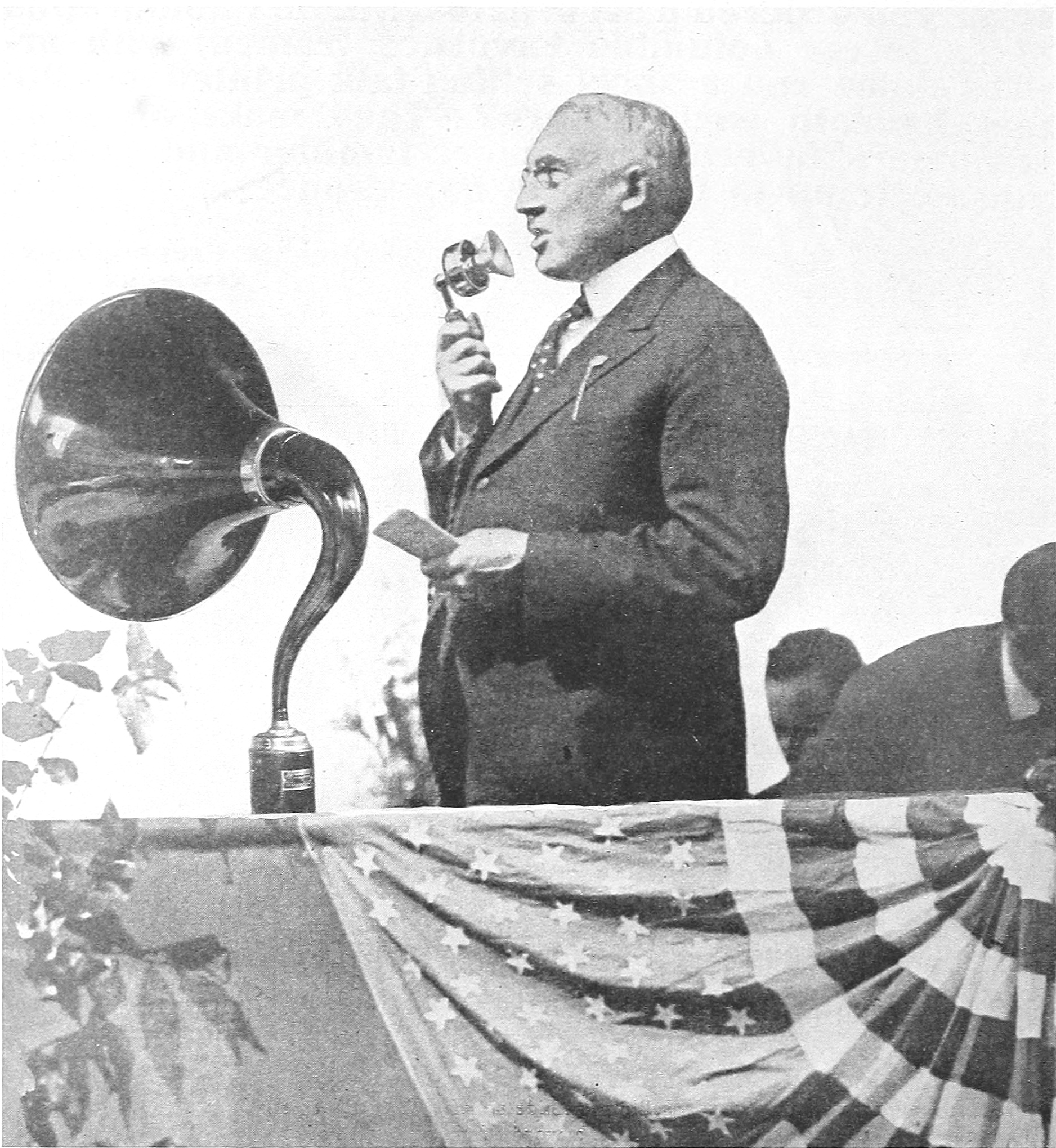
In 1915 Edwin Pridham and Peter Jensen put the pieces together in San Francisco. Their Magnavox Telemegafone paired a carbon microphone with a moving-coil driver and horn, and the later Type R2 carried the idea into production. A Magnavox installation supported President Wilson’s 1919 address in San Diego. Histories argue over which event was the ‘first PA’; what matters is that a complete, scalable chain now existed.
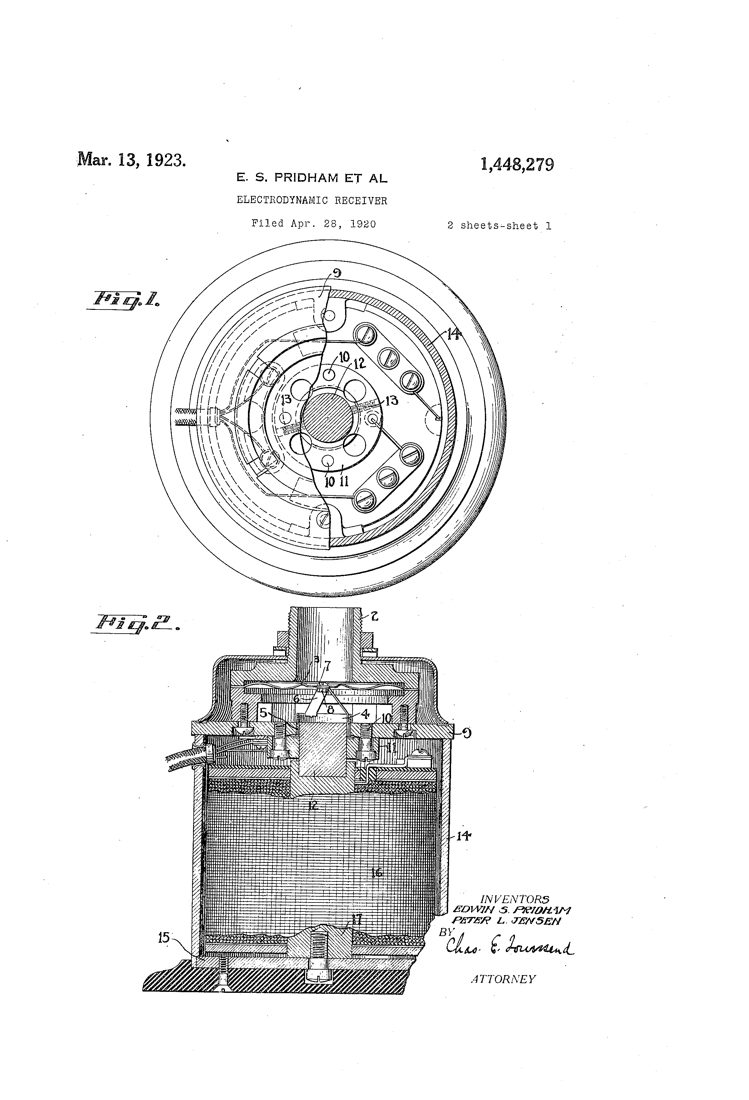 Magnavox Magnavox Telemegafone© Edwin S. Pridham & Peter L. Jensen
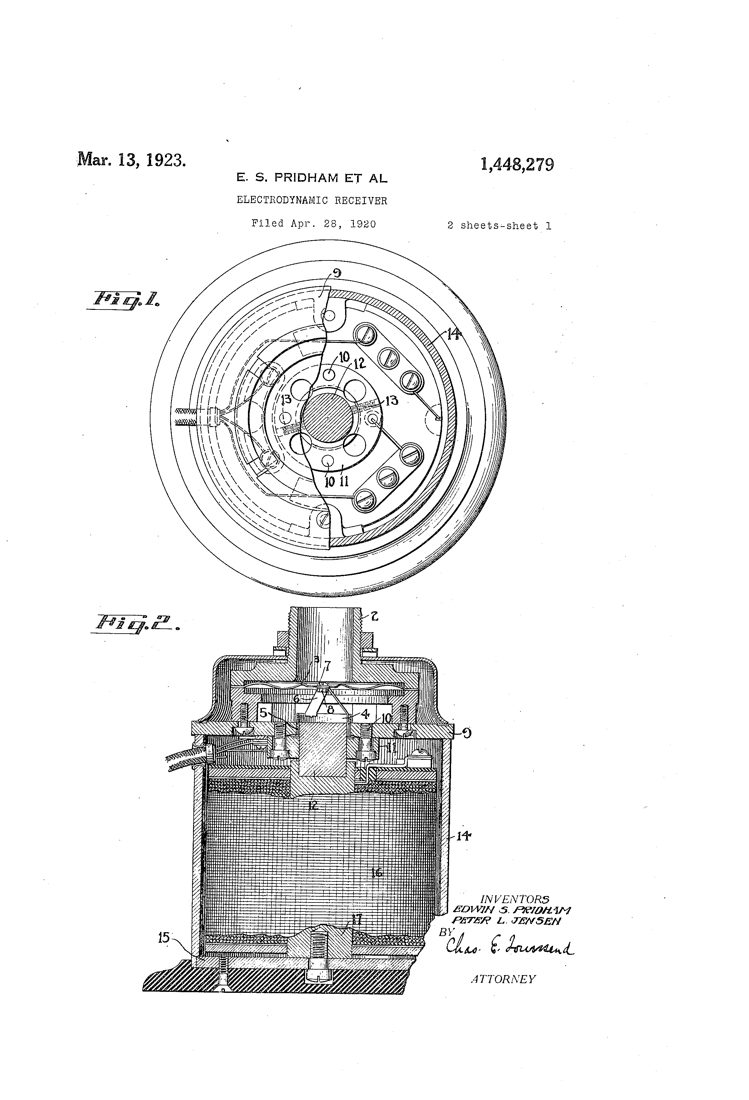 Magnavox Telemegafone Type R2© Edwin S. Pridham & Peter L. Jensen
Western Electric turned that chain into an engineered system. The 1-A public-address system was built around valve amplifiers. The 555 compression driver, designed by E. C. Wente, fed horns such as the 12-A and 15-A. The 594-A driver pushed bandwidth higher still. Cinema sound grew from the same parts in the Mirrophonic system and RCA’s Photophone. Those theatre systems then became the testbed for live reinforcement.
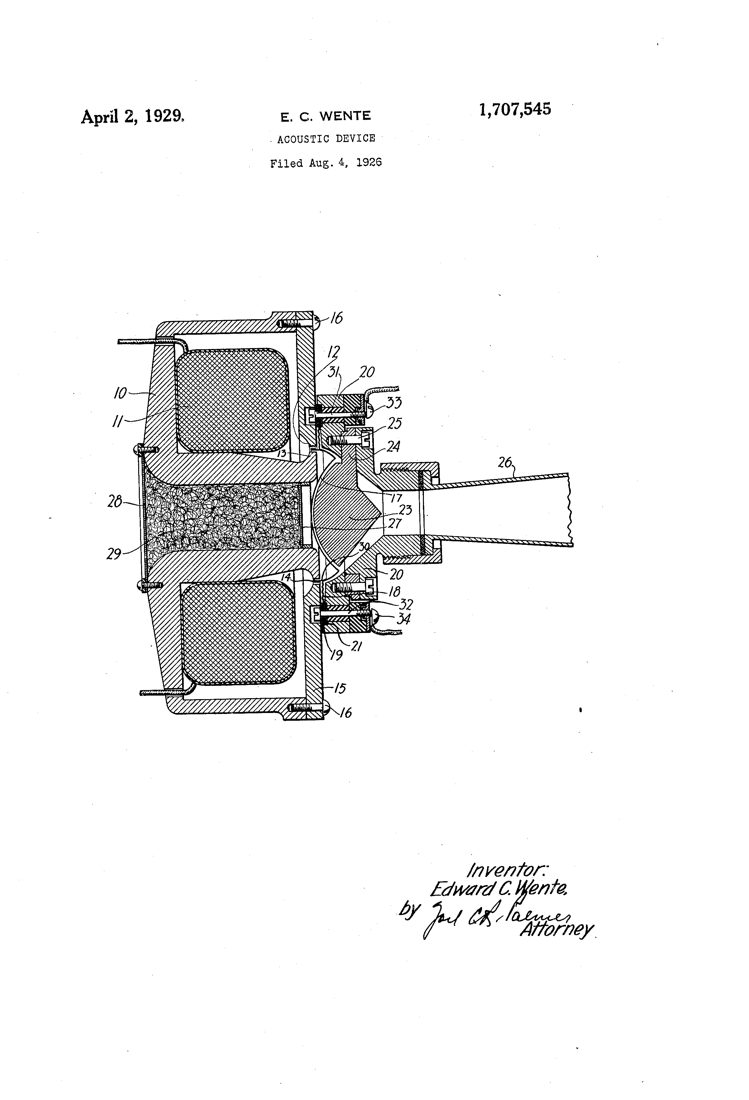 Western Electric Western Electric 555© Edward C. Wente (Bell Telephone Laboratories)
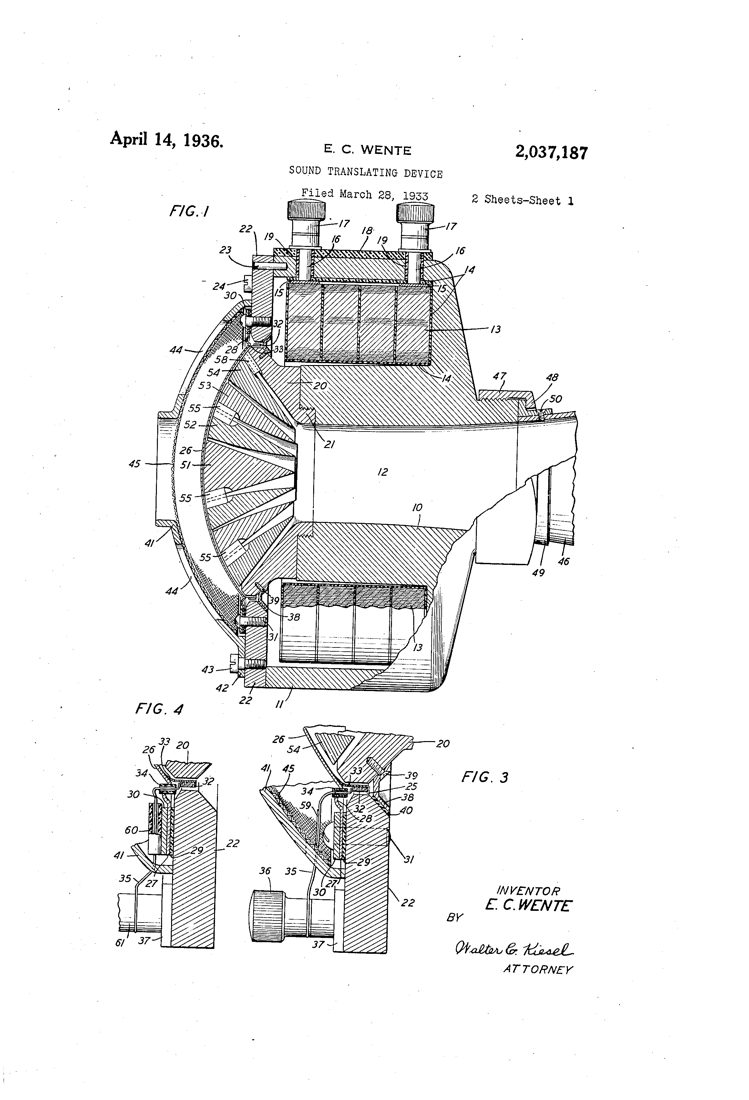 Western Electric 594-A driver© Edward C. Wente (Bell Telephone Laboratories)
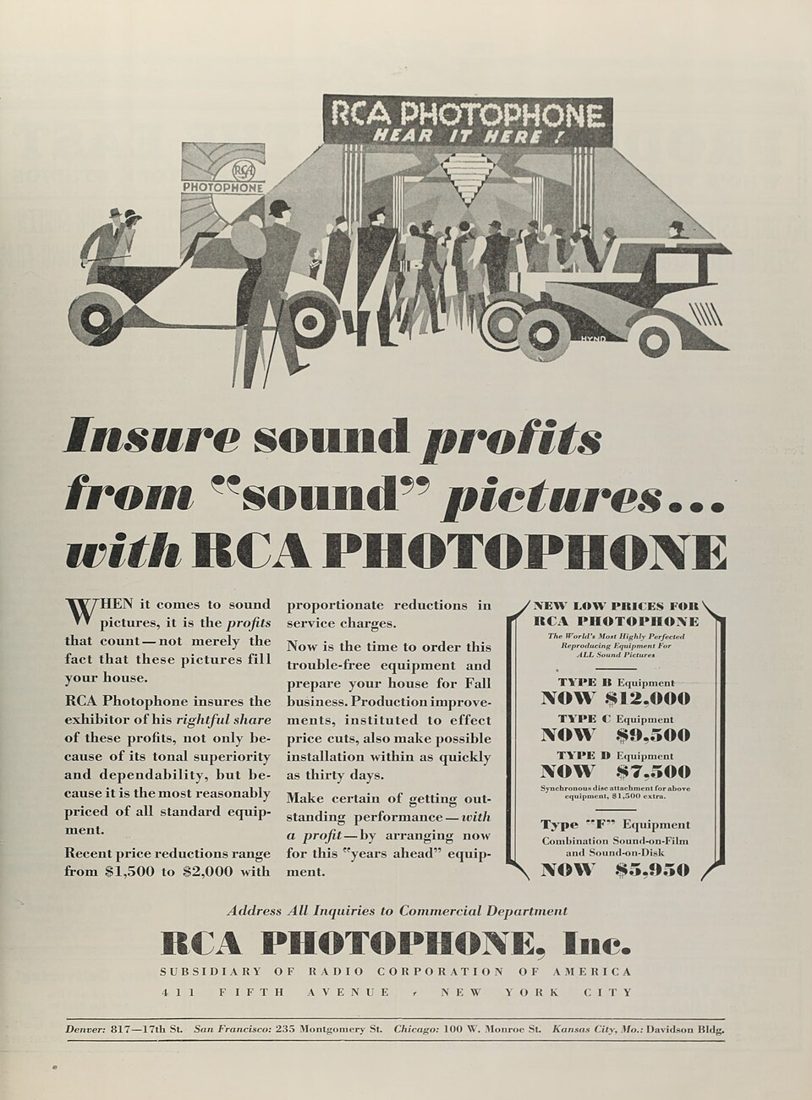 RCA Photophone theatre system© RCA Photophone, Inc. (The Film Daily, 1929)
The 1930s split the spectrum between dedicated devices. The Shearer horn and Lansing’s Iconic used compression drivers on multicellular horns over folded bass horns, and permanent-magnet drivers freed loudspeakers from field-coil power supplies. At the other end of the chain, the Marconi–Reisz carbon microphone gave way to the RCA 44-BX ribbon, the 618A moving-coil microphone and Shure’s Model 55 Unidyne, whose cardioid pattern rejected the loudspeakers behind it. Each improvement on one side made more gain usable on the other.
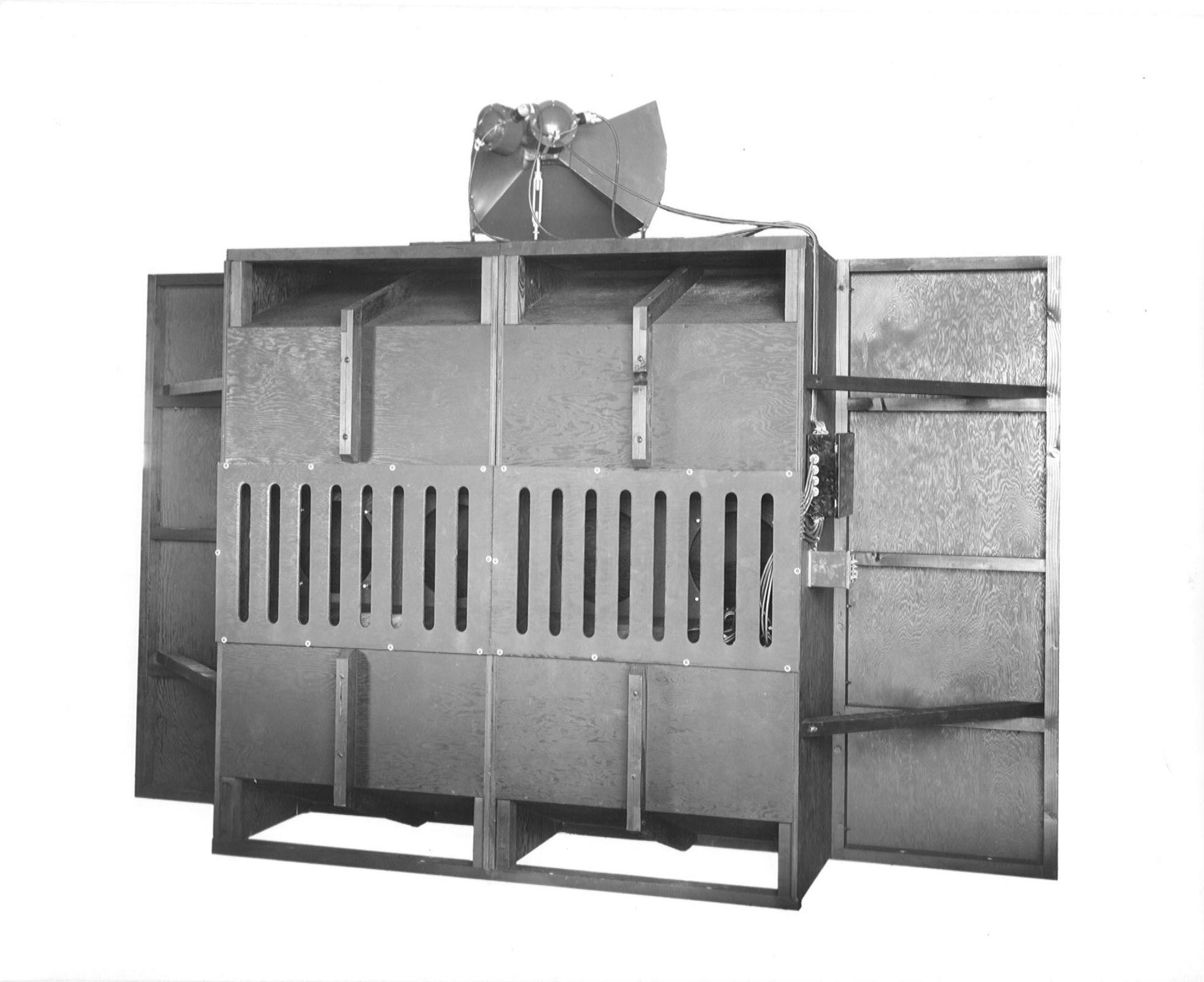 MGM / Lansing Shearer Horn system© Harman International; courtesy Mark Gander and John Eargle
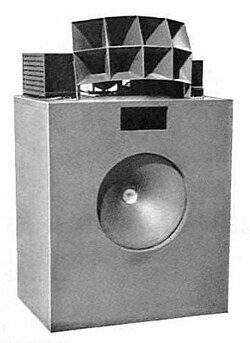 Lansing Manufacturing Iconic loudspeaker© Lansing Manufacturing Co. (1937)
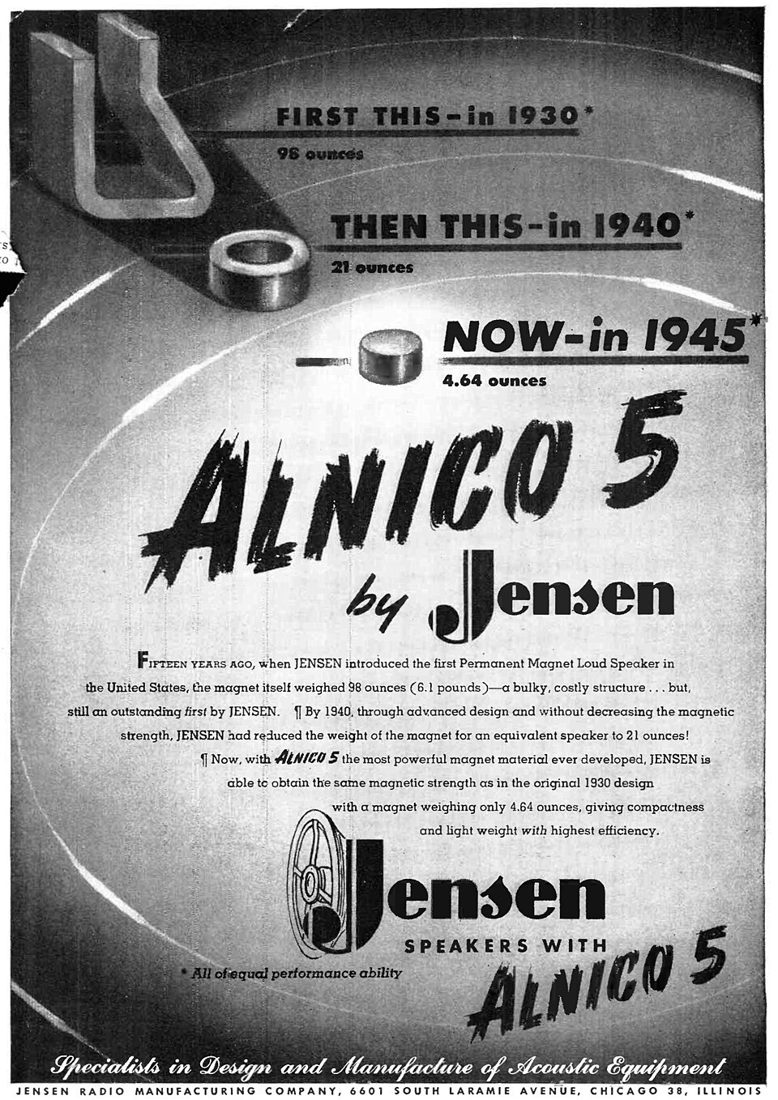 Jensen Permanent-magnet dynamic driver© Jensen Radio Manufacturing Co. (1945 advertisement)
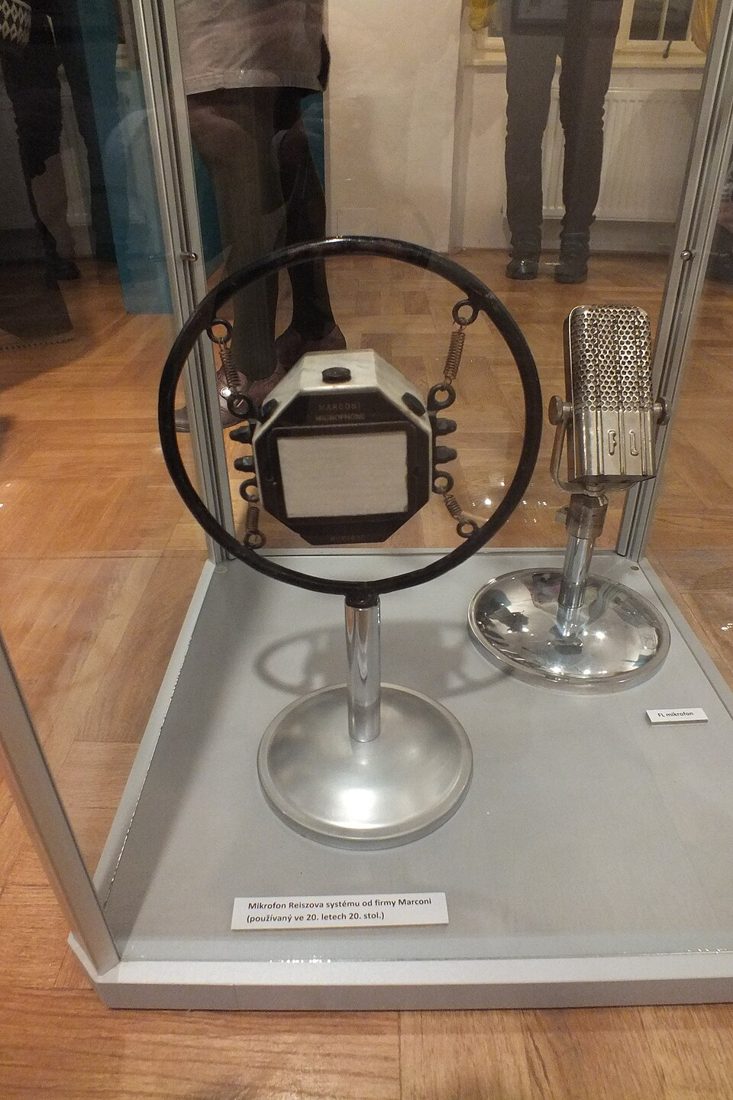 Marconi Marconi-Reisz microphone© Jan Kameníček
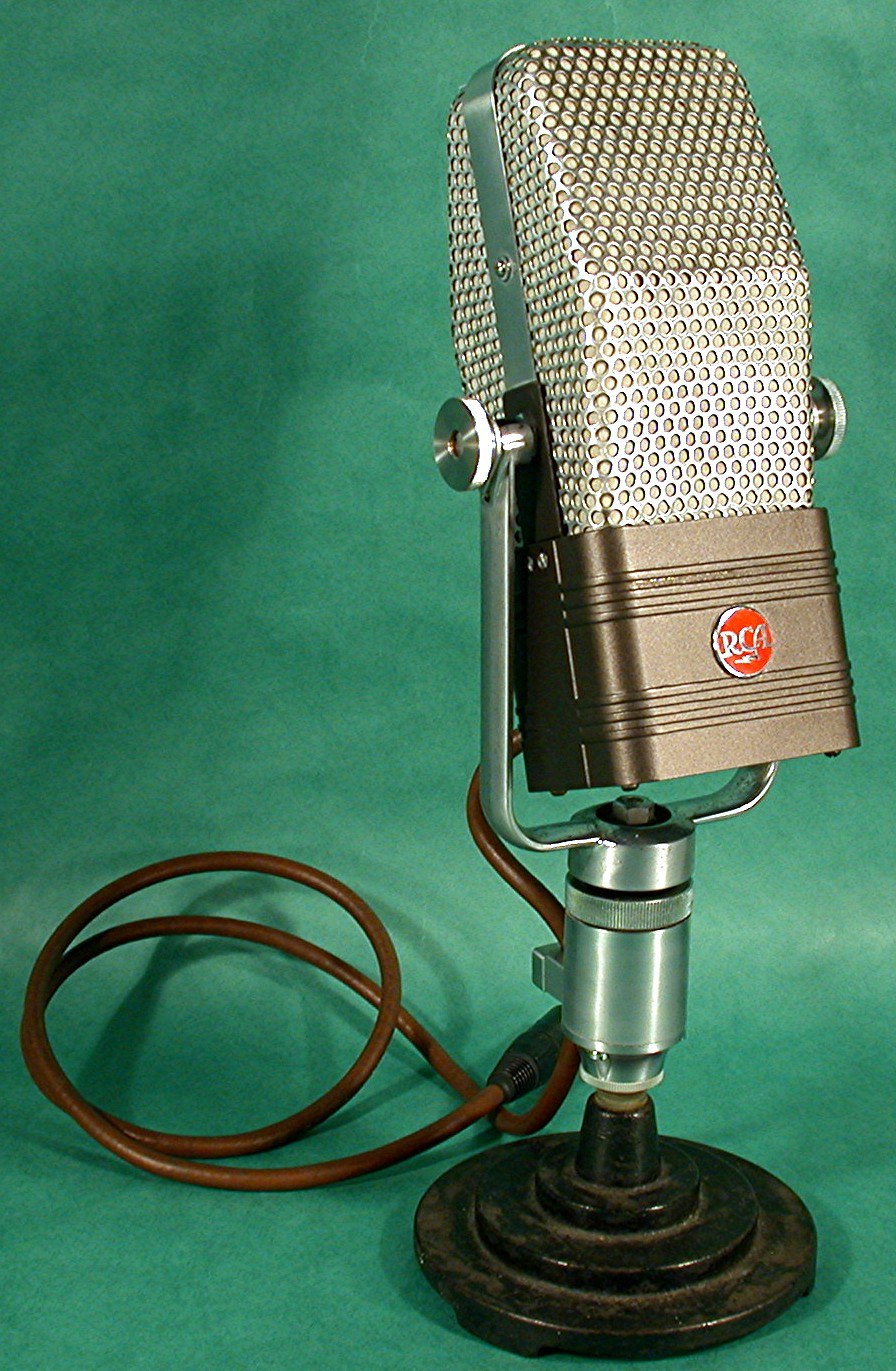 RCA 44-BX ribbon microphone© Roadside Guitars
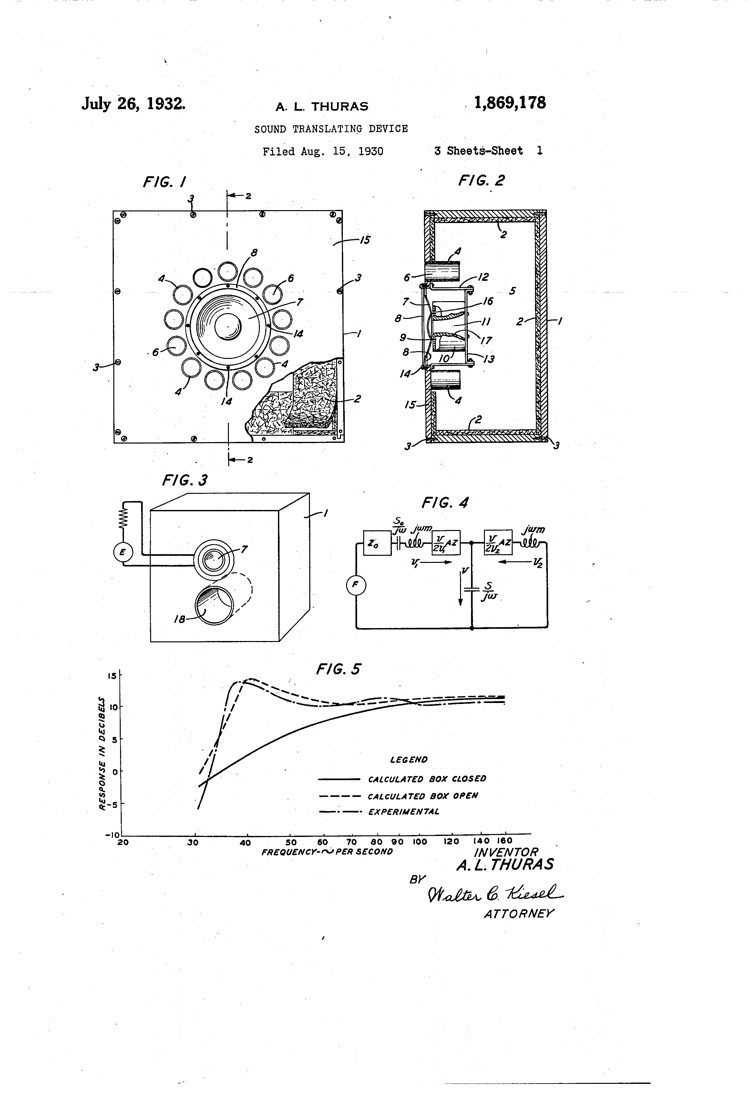 Western Electric 618A dynamic microphone© Albert L. Thuras (Bell Telephone Laboratories)
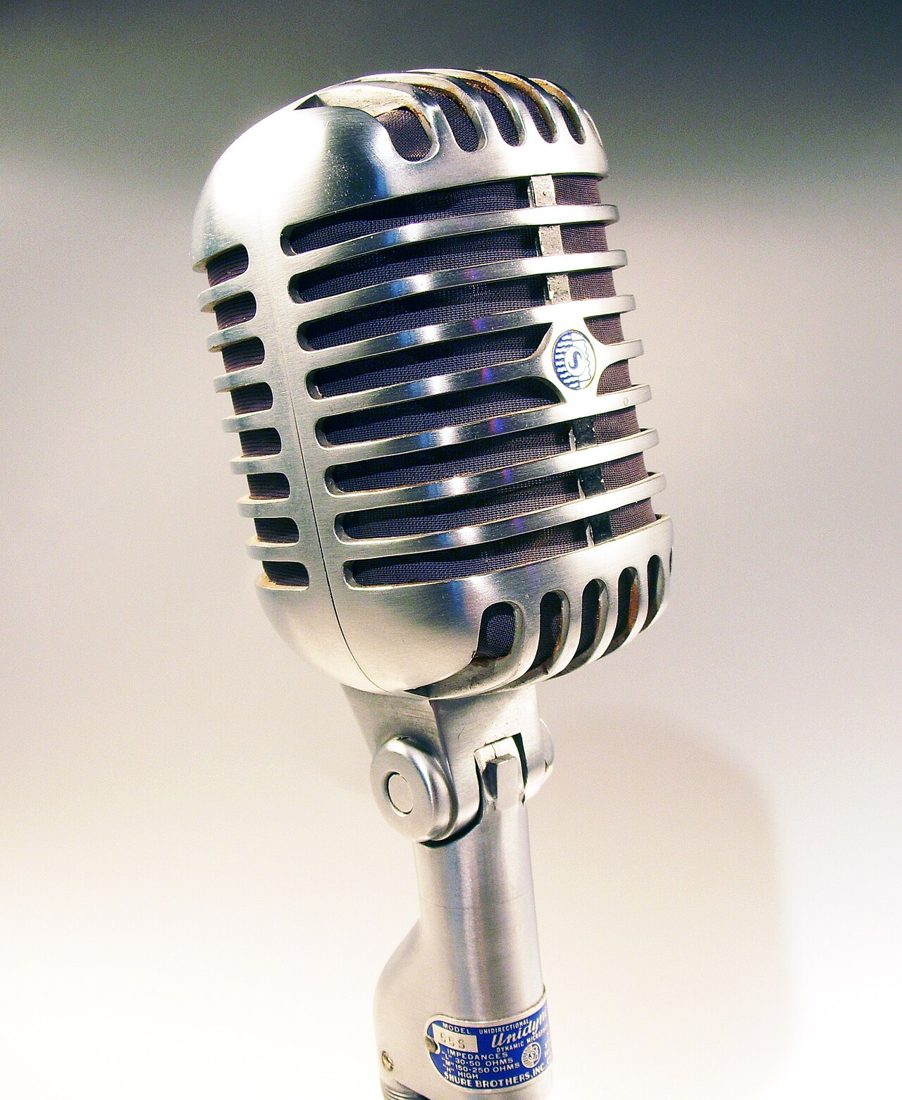 Shure Model 55 Unidyne© Holger.Ellgaard
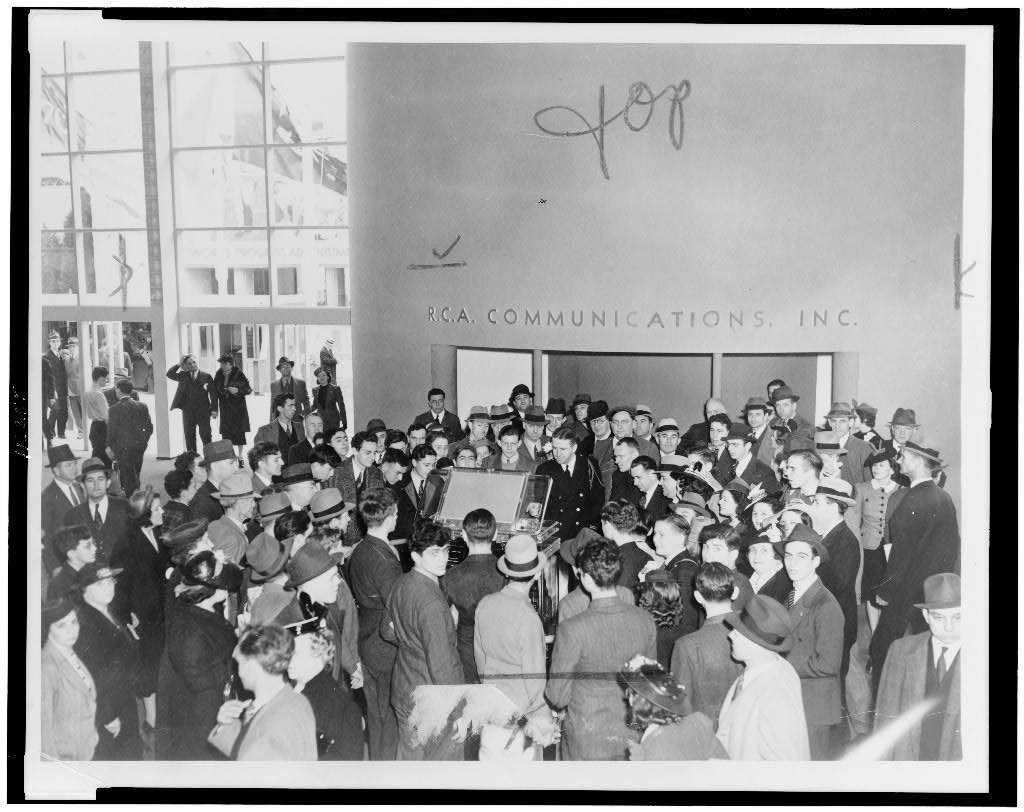
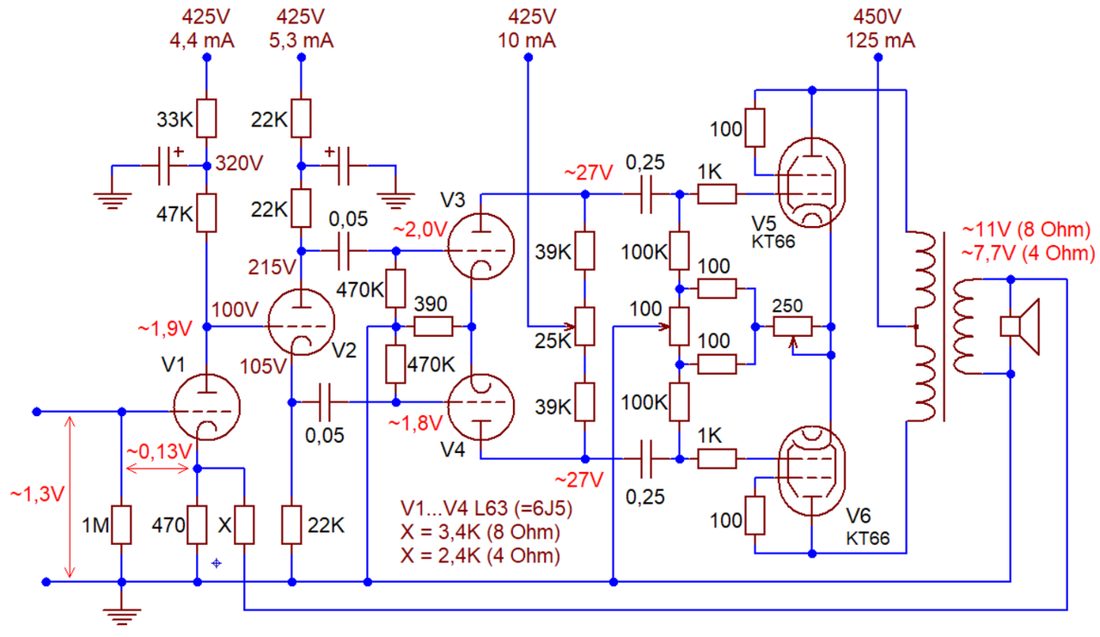
Distributed constant-voltage lines allowed one amplifier to feed many loudspeakers over long cable runs. Stadium and civic installations such as the Madison Square Garden system and the 1939 World’s Fair PA put coverage and intelligibility ahead of fidelity. After the war, amplifier designs like the Williamson and the Leak Point One showed how far low-distortion valve gain had come.
Chronology
Milestones
Magnavox outdoor demonstration
Pridham and Jensen demonstrate amplified speech using a moving-coil driver and large horn in San Francisco.
A president addresses a crowd
A Magnavox system reinforces President Woodrow Wilson in San Diego during his League of Nations tour.
Amplification joins the campaign trail
Magnavox horns and microphones carry political speeches to open-air crowds, making amplified speech a routine feature of public life.
Loudspeakers fill large rooms
Amplifiers and horn arrays become standard equipment for auditoriums, churches, and stadia as well as cinemas.
The Shearer Horn
A folded bass horn feeding multicellular high-frequency horns sets the template for divided-bandwidth sound in large rooms.
Technical principle
Compression drivers and divided bandwidth
A compression driver forces a small diaphragm’s output through a narrow throat and into a horn. A crossover sends low and high frequencies to different devices, letting each operate where it is efficient and reducing distortion.
Simplified signal chain
Working vocabulary