Equipment file · Cardioid dynamic microphone

Model 55 Unidyne

Shure · 1939

Evidence status · documented

Identity and core specifications are documented; some historical fields remain unavailable.

The Shure Model 55 Unidyne of 1939 was the first microphone to obtain a cardioid pattern from a single dynamic cartridge rather than by combining two elements. It used engineer Benjamin Bauer's Uniphase principle, covered by US patent 2,184,247, granted December 1939.

Introduced
1939
Category
Cardioid dynamic microphone
Intended use
Broadcast, public address and stage vocals
Production
Shure Brothers Company, Chicago

Equipment photographs · 2
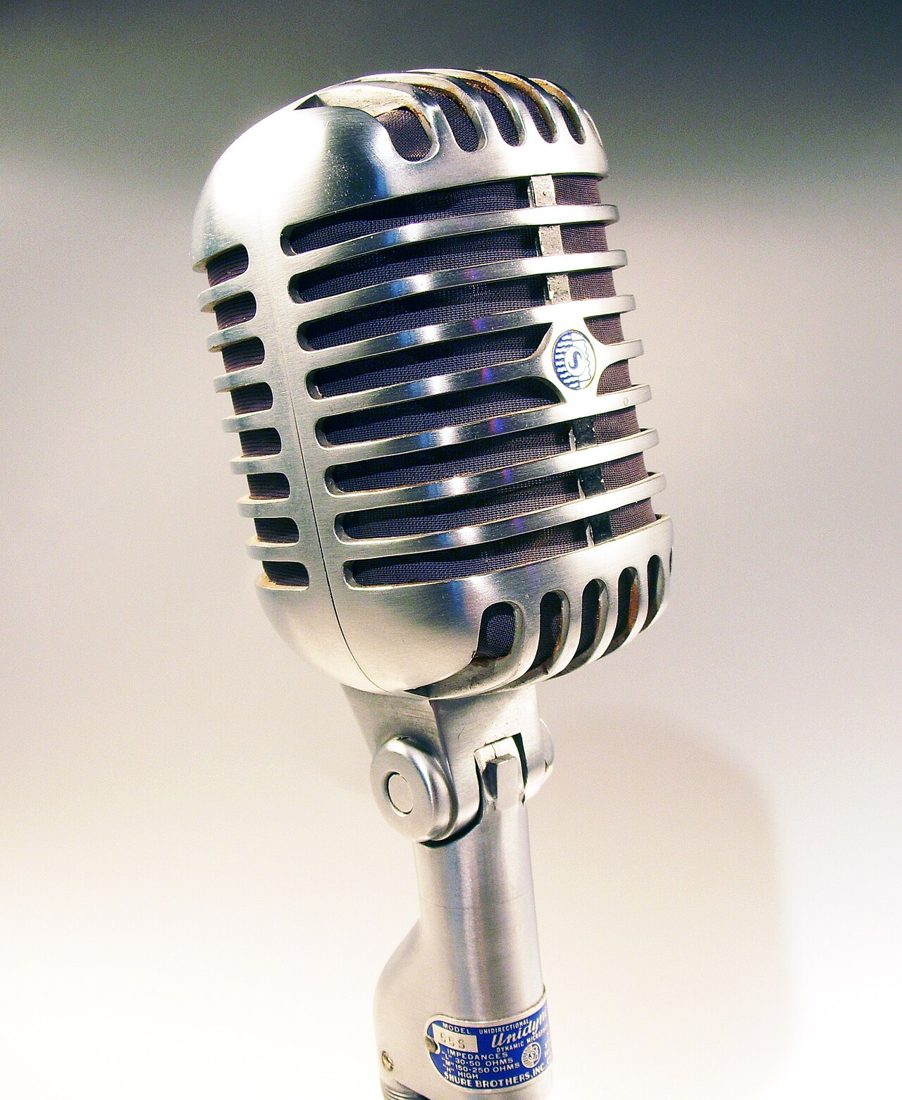
Shure 55S Unidyne (later production of the Model 55 line)

1 / 2 · Shure 55S Unidyne (later production of the Model 55 line)

Shure 55S Unidyne (later production of the Model 55 line)·Holger.Ellgaard·CC BY-SA 3.0

Why it mattered

  1. 01

    One-cartridge directional pickup reduced feedback and off-axis pickup, a direct gain for PA and stage use.

  2. 02

    Its principle underpinned decades of Shure cardioid dynamics, including the [[shure-sm57|SM57]] and SM58.

Engineering record

Polar pattern
Cardioid from a single dynamic transducer via Bauer's Uniphase principle[1]
Patent
US 2,184,247, 'Microphone Apparatus', filed 20 December 1937, granted 19 December 1939[3]

Original pricing

No reliable period price located

2026 equivalent

Not calculated without a reliable original price.

Public price evidence was not sufficient to publish a defensible original figure.

Use in the field

Used by public figures and entertainers in films, theatres and public events from the 1940s, per Shure's history[2]

Manuals & original documents

Sources

  1. 175 Years of the Unidyne MicrophoneShure · reference · 2014-12-19
  2. 2The Unidyne Story (1939–2014)Shure Incorporated · brochure · 2014
  3. 3Microphone Apparatus, US Patent 2,184,247US Patent Office · patent · 1939-12-19

Contribute to the record

Know more about Model 55 Unidyne?

Corrections, firsthand information, original documents, and credited photograph sources are welcome.

Your email is private and will not appear in the archive. Contributions are not published automatically.

Help build the archive

A missing piece? A correction?

Contribute to Resonant

Support the archive

Resonant is built one verified record at a time: research hours, archival image rights, and the hosting that keeps every era, equipment file, and citation free to read. If this archive is useful to you, a donation of any size keeps the next entry moving.

How donations are used

Payments go directly to the archive’s editor through Venmo and Cash App. Resonant is an independent project rather than a registered charity, so donations are not tax-deductible and nothing is sold or subscribed to in return.