Equipment file · Compression driver

Western Electric 555

Western Electric · 1926

Evidence status · verified

Claims in this file are tied to item-specific sources.

A highly efficient compression driver used with large theater horns.

Introduced
1926
Category
Compression driver
Intended use
High-efficiency speech and program reproduction in large rooms
Production
Late 1920s–1930s; later variants followed

Equipment photographs · 1
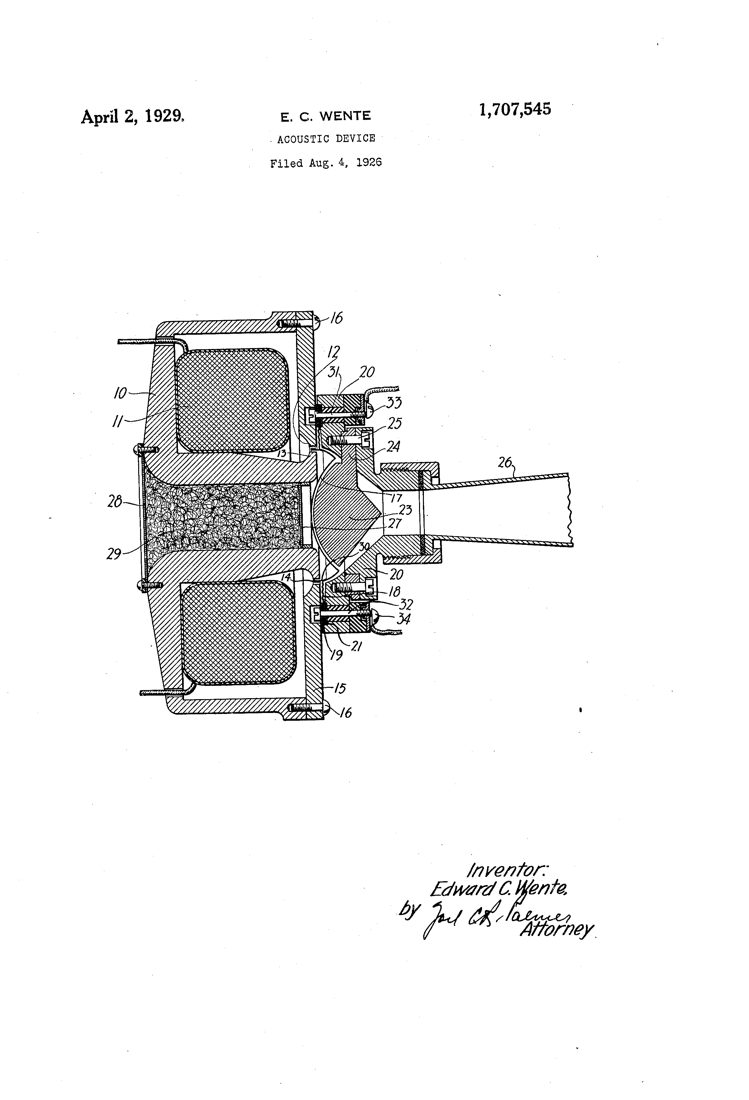
US patent 1,707,545 (1929): acoustic device, the compression-driver design used in the 555

1 / 1 · US patent 1,707,545 (1929): acoustic device, the compression-driver design used in the 555

US patent 1,707,545 (1929): acoustic device, the compression-driver design used in the 555·Edward C. Wente (Bell Telephone Laboratories)·Public domain (US patent)
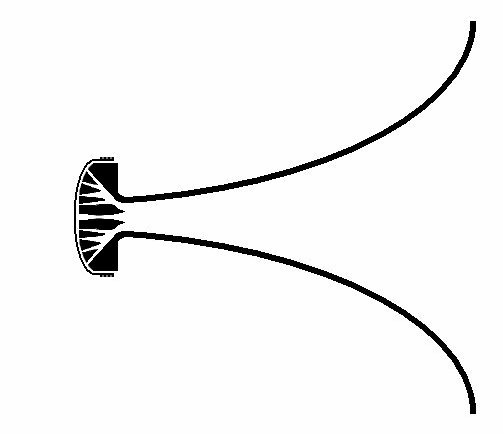
Cross-sectional diagram of a compression driver with phase plug coupled to an acoustic horn

A later explanatory section drawing shows the compression-loading principle used by drivers in this lineage.

Compression driver and horn, section view·Binksternet·CC BY-SA 3.0

Why it mattered

  1. 01

    Used a light diaphragm, phase plug, narrow throat, and horn to produce high acoustic output from limited tube-amplifier power.

  2. 02

    Its compression-driver architecture became a durable foundation for large-format reinforcement.

Engineering record

Bandwidth
The driver was intended to load into a large horn and reproduce the critical speech and upper program band with high efficiency.[1]
System role
It operated as part of a divided-band installation rather than as a stand-alone full-range loudspeaker.[1]

Original pricing

No reliable public list price located

2026 equivalent

Not calculated without a reliable original price.

The 555 was commonly supplied within engineered Western Electric installations rather than as modern retail concert inventory.

Use in the field

Western Electric horn systems served large theatres and auditoriums; the live-sound lineage lies in their high-output driver and system-integration methods.[1]

Professional reactions

Release-period reaction · March 1928

Thuras introduced the new receiver as a departure from previous designs and reported that its commercial 555-W form was already being used for talking motion pictures. The excitement was about an engineered loud-speaking receiver, not simply a louder telephone earpiece.

A. L. Thuras, Bell Laboratories engineer and co-developer of the 555 receiverBell Laboratories’ own technical journal, not an independent trade review; cinema application illustrates the shared reinforcement technology. · Manufacturer representative in trade interview · Paraphrased account[2]Bell Telephone Laboratories (digitized by worldradiohistory.com) · A New Loud-Speaking Receiver, Bell Laboratories Record, Vol. 6, No. 9

Manuals & original documents

Sources

  1. 1555 ReceiverWestern Electric · reference
  2. 2A New Loud-Speaking Receiver, Bell Laboratories Record, Vol. 6, No. 9Bell Telephone Laboratories (digitized by worldradiohistory.com) · technical paper · March 1928

Contribute to the record

Know more about Western Electric 555?

Corrections, firsthand information, original documents, and credited photograph sources are welcome.

Your email is private and will not appear in the archive. Contributions are not published automatically.

Help build the archive

A missing piece? A correction?

Contribute to Resonant

Support the archive

Resonant is built one verified record at a time: research hours, archival image rights, and the hosting that keeps every era, equipment file, and citation free to read. If this archive is useful to you, a donation of any size keeps the next entry moving.

How donations are used

Payments go directly to the archive’s editor through Venmo and Cash App. Resonant is an independent project rather than a registered charity, so donations are not tax-deductible and nothing is sold or subscribed to in return.