Equipment file · Transverse-current carbon microphone

Marconi-Reisz microphone

Marconi · 1925–1927

Evidence status · documented

Identity and core specifications are documented; some historical fields remain unavailable.

The Marconi-Reisz microphone held carbon granules between electrodes in a hollowed marble block behind a thin diaphragm. It was the BBC's standard studio microphone from 1926 to 1933, replacing noisier Peel-Conner carbon microphones, and needed turning daily to keep its granules from settling.

Introduced
1925–1927
Category
Transverse-current carbon microphone
Intended use
Broadcast studio pickup
Production
Marconi, Chelmsford, from Eugen Reisz's German design

Equipment photographs · 1
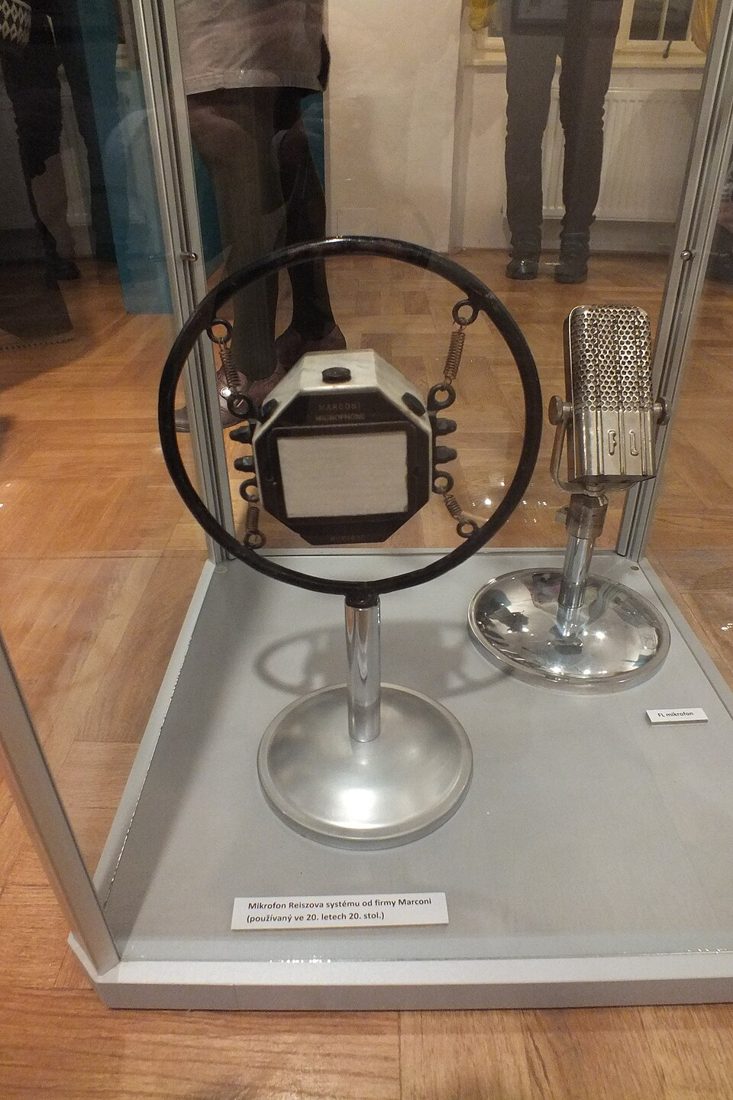
Marconi Reisz microphone

1 / 1 · Marconi Reisz microphone

Marconi Reisz microphone·Jan Kameníček·CC BY-SA 4.0

Why it mattered

  1. 01

    A large fidelity gain over first-generation carbon microphones, with later versions within about 2 dB from 100 Hz to 8 kHz.

  2. 02

    It was succeeded at the BBC by ribbon microphones from the mid-1930s.

Engineering record

Construction
Carbon granules between electrodes in a marble block, fronted by a mica or rice-paper diaphragm[2]
Response
Within about 2 dB from 100 Hz to 8 kHz in later versions[2]

Original pricing

No reliable period price located

2026 equivalent

Not calculated without a reliable original price.

Public price evidence was not sufficient to publish a defensible original figure.

Use in the field

BBC standard studio microphone, 1926–1933[1]

Manuals & original documents

No authoritative manual or original document has been located for this profile.

Sources

  1. 1Marconi-Reisz 'Marble' MicrophoneScience Museum Group Collection · archive
  2. 2The Marconi-Reisz Carbon Microphoneorbem.co.uk · reference

Contribute to the record

Know more about Marconi-Reisz microphone?

Corrections, firsthand information, original documents, and credited photograph sources are welcome.

Your email is private and will not appear in the archive. Contributions are not published automatically.

Help build the archive

A missing piece? A correction?

Contribute to Resonant

Support the archive

Resonant is built one verified record at a time: research hours, archival image rights, and the hosting that keeps every era, equipment file, and citation free to read. If this archive is useful to you, a donation of any size keeps the next entry moving.

How donations are used

Payments go directly to the archive’s editor through Venmo and Cash App. Resonant is an independent project rather than a registered charity, so donations are not tax-deductible and nothing is sold or subscribed to in return.