Equipment photographs · 1
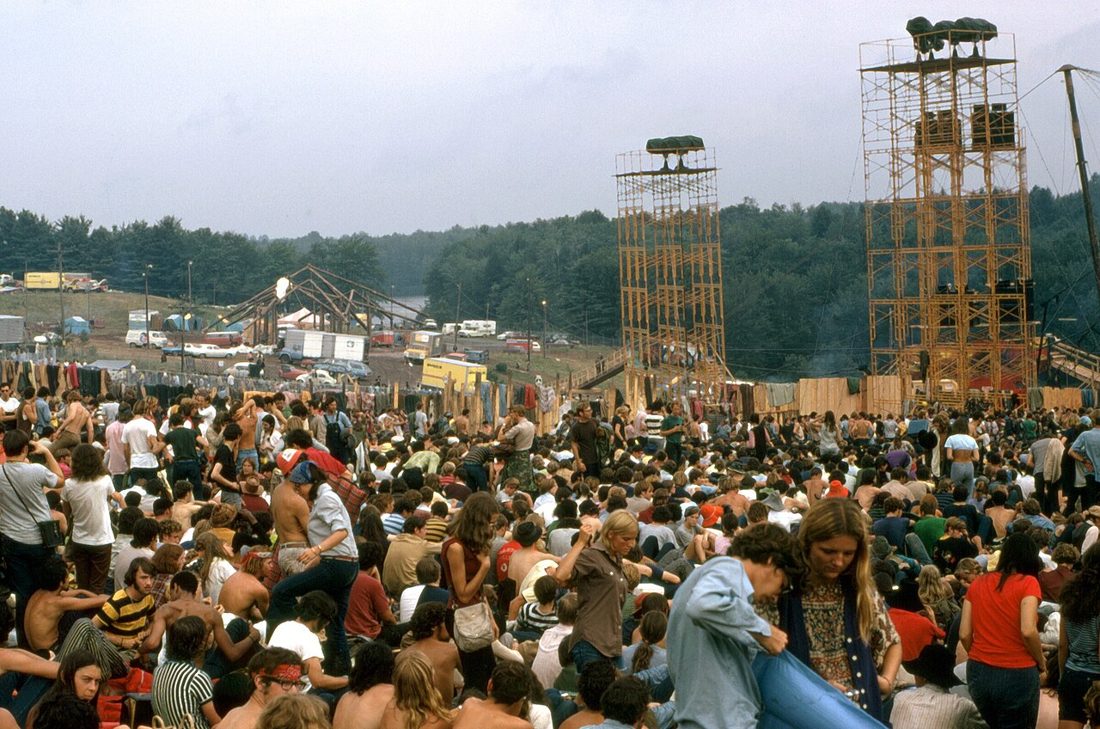
1 / 1 · The Woodstock sound towers, 1969
The Woodstock sound towers, 1969·James M Shelley·CC BY-SA 4.0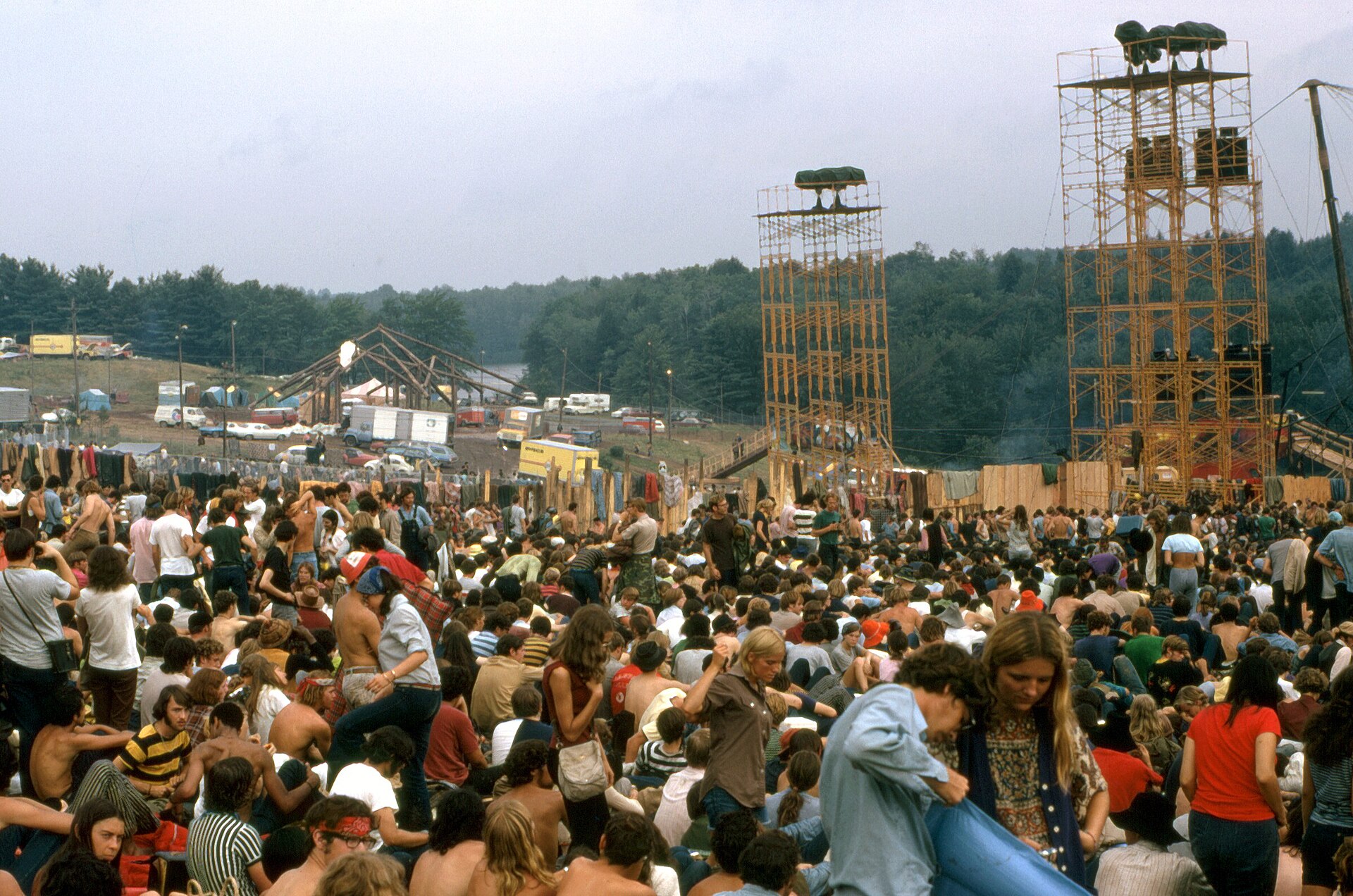
The surviving festival photograph shows the tall loudspeaker towers above the Woodstock audience.
Sound towers above the festival crowd, 1969·James M. Shelley·CC BY-SA 4.0Why it mattered
- 01
Demonstrated that intelligible amplified music and speech could be delivered across an unprecedented outdoor audience.
- 02
Made festival sound a visible engineering discipline rather than an enlarged club PA.
Original pricing
No reliable build cost located
2026 equivalent
Not calculated without a reliable original price.
Published claims about the system's expense lack a sufficiently clear primary cost record.
Use in the field
Bill Hanley brought experience from the Newport Folk Festival and Fillmore East to the August 1969 Woodstock production.[3]
Professional reactions
Later recollection · January 1989 (reprinted 16 August 2019)
Hanley recalled choosing Altec 290 high-frequency drivers after failures with JBL drivers and expensive diaphragm replacements. His excitement about a larger concert system was tempered by practical survival: he needed drivers that would stay together on the job.
Manuals & original documents
No authoritative manual or original document has been located for this profile.
Sources
- 1The Sound of WoodstockPBS American Experience · archive
- 2The History of the Sound at WoodstockShure · reference
- 3Woodstock: 50 Years AfterFOH Magazine · reference
- 4RE/P Files: An Interview With Bill Hanley (page 2)ProSoundWeb (reprint of Recording Engineer/Producer, January 1989) · interview · January 1989 (reprinted 16 August 2019)
Contribute to the record
Know more about Woodstock PA?
Corrections, firsthand information, original documents, and credited photograph sources are welcome.