Equipment file · Transfer-function measurement system

SIM

Meyer Sound · 1986; SIM II in 1991

Evidence status · verified

Claims in this file are tied to item-specific sources.

Source Independent Measurement enables transfer-function analysis in real venues.

Introduced
1986; SIM II in 1991
Category
Transfer-function measurement system
Intended use
Real-time alignment and optimization of reinforcement systems
Production
1986 onward in successive generations

Equipment photographs · 1
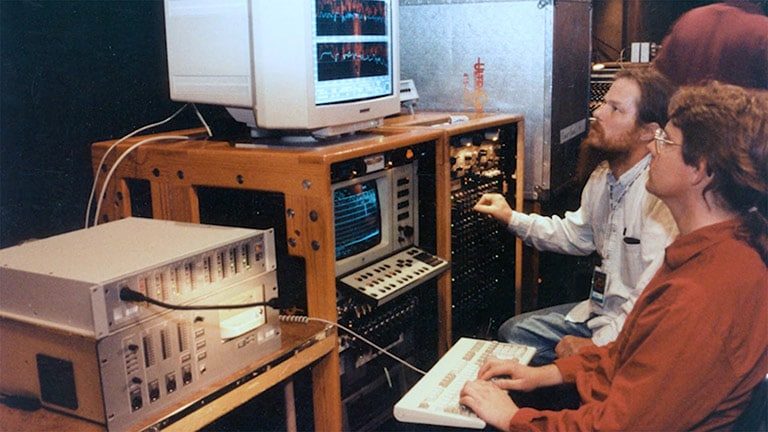
SIM II measurement system

1 / 1 · SIM II measurement system

SIM II measurement system·Meyer Sound·© Meyer Sound, used for identification and historical commentary

Why it mattered

  1. 01

    Allowed engineers to compare a source signal with the measured room/system response in real time.

  2. 02

    Made phase, delay, polarity, and frequency-response evidence central to repeatable touring-system alignment.

Engineering record

Method
SIM uses source-independent transfer-function measurement, allowing program material—not only test sweeps—to serve as the stimulus.[1]
SIM II speed
A full response measurement could be captured in about 13 seconds, compared with minutes and many operations on earlier tools.[2]

Original pricing

No reliable original price located

2026 equivalent

Not calculated without a reliable original price.

No verified 1986 or 1991 system list price was found.

Use in the field

SIM became a foundational field tool for system technicians working under short load-in and sound-check schedules.[3]

Manuals & original documents

Sources

  1. 1Examining Meyer Sound's SIM 3Live Design · reference
  2. 2Evolution of large-scale system optimizationProSoundWeb · reference
  3. 3SIM II Hall of FameMeyer Sound · reference

Contribute to the record

Know more about SIM?

Corrections, firsthand information, original documents, and credited photograph sources are welcome.

Your email is private and will not appear in the archive. Contributions are not published automatically.

Help build the archive

A missing piece? A correction?

Contribute to Resonant

Support the archive

Resonant is built one verified record at a time: research hours, archival image rights, and the hosting that keeps every era, equipment file, and citation free to read. If this archive is useful to you, a donation of any size keeps the next entry moving.

How donations are used

Payments go directly to the archive’s editor through Venmo and Cash App. Resonant is an independent project rather than a registered charity, so donations are not tax-deductible and nothing is sold or subscribed to in return.