Equipment file · Two-way horn-loaded loudspeaker system

A-series Voice of the Theatre

Altec Lansing · 1945 series; A7 in 1954

Evidence status · verified

Claims in this file are tied to item-specific sources.

Two-way horn-loaded systems combining cinema efficiency with standardized components.

Introduced
1945 series; A7 in 1954
Category
Two-way horn-loaded loudspeaker system
Intended use
Cinema, theatre, installed sound, and early concert reinforcement
Production
1945 into the late twentieth century

Equipment photographs · 1
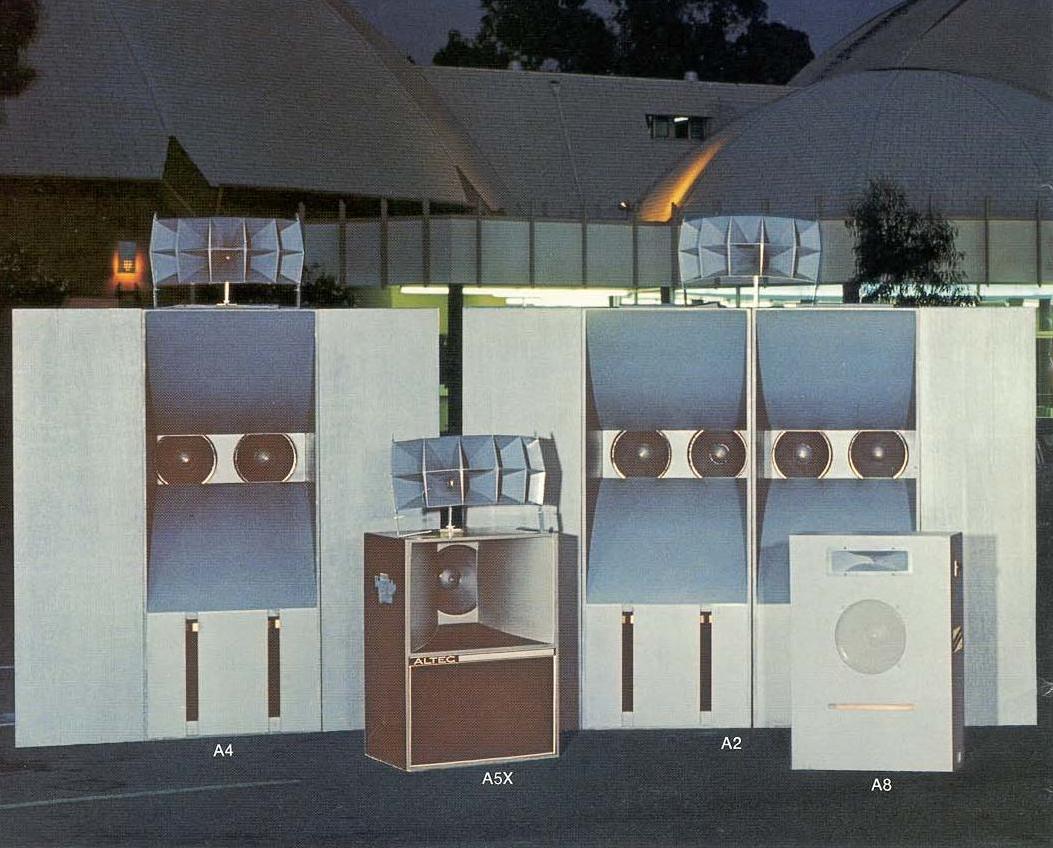
Altec Voice of the Theatre catalogue family photograph — A4, A2, A5 and A8 variants, circa 1978

1 / 1 · Altec Voice of the Theatre catalogue family photograph — A4, A2, A5 and A8 variants, circa 1978

Altec Voice of the Theatre catalogue family photograph — A4, A2, A5 and A8 variants, circa 1978·Altec Lansing Technology, courtesy Paul Barello·© Altec Lansing Technology; used for identification and historical commentary
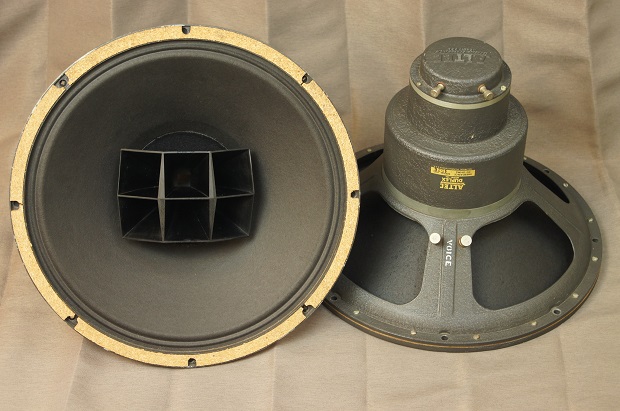
Two vintage coaxial loudspeakers, one facing forward and one showing its magnet and basket

A period Altec coaxial driver illustrates the company's divided-band transducer work; it is not an A7 cabinet.

Duplex coaxial loudspeaker·Author unknown·CC0

Why it mattered

  1. 01

    Standardized a high-efficiency, divided-band loudspeaker system at a time when amplifier power remained costly.

  2. 02

    Its A7 variant moved readily from cinemas into studios, stages, and early rock reinforcement.

Engineering record

Topology
The large systems combined horn-loaded low-frequency cabinets with compression drivers and multicellular horns; later A6 versions used a Mantaray constant-directivity horn.[2]
System approval
Altec literature records Academy Research Council approval for motion-picture reproduction.[1]

Original pricing

No reliable 1954 US list price located

2026 equivalent

Not calculated without a reliable original price.

A Japanese reference records later market prices, but those figures are not presented as the original US launch price.

Use in the field

The high acoustic output available from modest tube-amplifier power made the series useful before purpose-built touring cabinets became common.[1]

Professional reactions

Later field experience · September 2020 (reprinted 14 June 2021)

Dorsey preferred Voice of the Theatre variants with 1-inch compression drivers and a 500 Hz crossover, judging that they kept crossover artifacts farther from the vocal band. He contrasted this with a cinema installer’s preference for the more robust 288, illustrating the trade-off between sound and survivability.

Scott Dorsey, Audio engineer and regular audioXpress contributor; worked in broadcast/recording and does live acoustic concert recordingModern restoration and listening experience with A5/A7 variants, not a 1945 launch endorsement. · Independent firsthand source · Paraphrased account[3]audioXpress · Altec Lansing's Voice of the Theatre Speakers - What You Need to Know

Manuals & original documents

Sources

  1. 1Voice of the Theatre manualAltec Lansing · manual
  2. 2Voice of the Theatre systemsAltec Lansing · brochure · 1983
  3. 3Altec Lansing's Voice of the Theatre Speakers - What You Need to KnowaudioXpress · interview · September 2020 (reprinted 14 June 2021)

Contribute to the record

Know more about A-series Voice of the Theatre?

Corrections, firsthand information, original documents, and credited photograph sources are welcome.

Your email is private and will not appear in the archive. Contributions are not published automatically.

Help build the archive

A missing piece? A correction?

Contribute to Resonant

Support the archive

Resonant is built one verified record at a time: research hours, archival image rights, and the hosting that keeps every era, equipment file, and citation free to read. If this archive is useful to you, a donation of any size keeps the next entry moving.

How donations are used

Payments go directly to the archive’s editor through Venmo and Cash App. Resonant is an independent project rather than a registered charity, so donations are not tax-deductible and nothing is sold or subscribed to in return.