Equipment file · Coaxial (Duplex) loudspeaker

604 Duplex

Altec Lansing · 1944

Evidence status · documented

Identity and core specifications are documented; some historical fields remain unavailable.

The Altec 604 Duplex was a 15-inch coaxial loudspeaker whose compression-driver tweeter fired through the woofer's pole piece into a small multicellular horn. It followed the 1943 model 601 but used an Alnico V permanent magnet instead of a field coil.

Introduced
1944
Category
Coaxial (Duplex) loudspeaker
Intended use
Studio monitoring, later tour and installed sound
Production
Altec Lansing, 1944 into the 1990s (604B to 604-8K)

Equipment photographs · 1
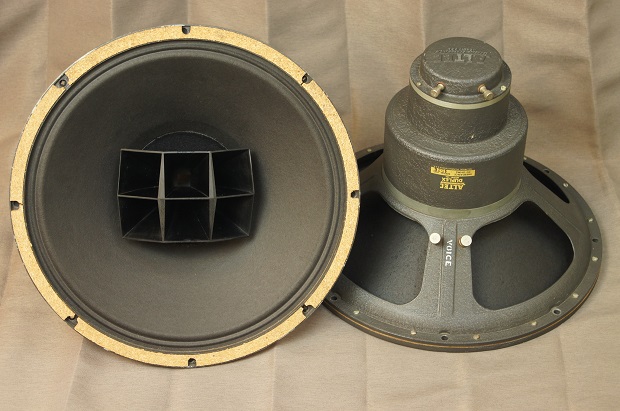
Two vintage coaxial loudspeakers, one facing forward and one showing its magnet and basket

1 / 1 · Duplex coaxial loudspeaker

Duplex coaxial loudspeaker·Author unknown·CC0

Why it mattered

  1. 01

    It became the reference coaxial monitor of mid-century broadcast and recording control rooms.

  2. 02

    Its point-source geometry influenced later monitors, including UREI's 811/813/815 series.

Engineering record

Drivers
15-inch woofer with 3-inch voice coil on Alnico V, HF compression driver through the pole piece into a six-cell horn[1]
Power
About 30 watts[1]

Original pricing

No reliable period price located

2026 equivalent

Not calculated without a reliable original price.

Public price evidence was not sufficient to publish a defensible original figure.

Use in the field

Standard broadcast and recording monitor; basis of UREI's 811/813/815 line[1]

Manuals & original documents

No authoritative manual or original document has been located for this profile.

Sources

  1. 11944 Altec Lansing 604 Duplex SpeakerMix · technical paper · 2006-09-01

Contribute to the record

Know more about 604 Duplex?

Corrections, firsthand information, original documents, and credited photograph sources are welcome.

Your email is private and will not appear in the archive. Contributions are not published automatically.

Help build the archive

A missing piece? A correction?

Contribute to Resonant

Support the archive

Resonant is built one verified record at a time: research hours, archival image rights, and the hosting that keeps every era, equipment file, and citation free to read. If this archive is useful to you, a donation of any size keeps the next entry moving.

How donations are used

Payments go directly to the archive’s editor through Venmo and Cash App. Resonant is an independent project rather than a registered charity, so donations are not tax-deductible and nothing is sold or subscribed to in return.